
Transgender Awareness Week
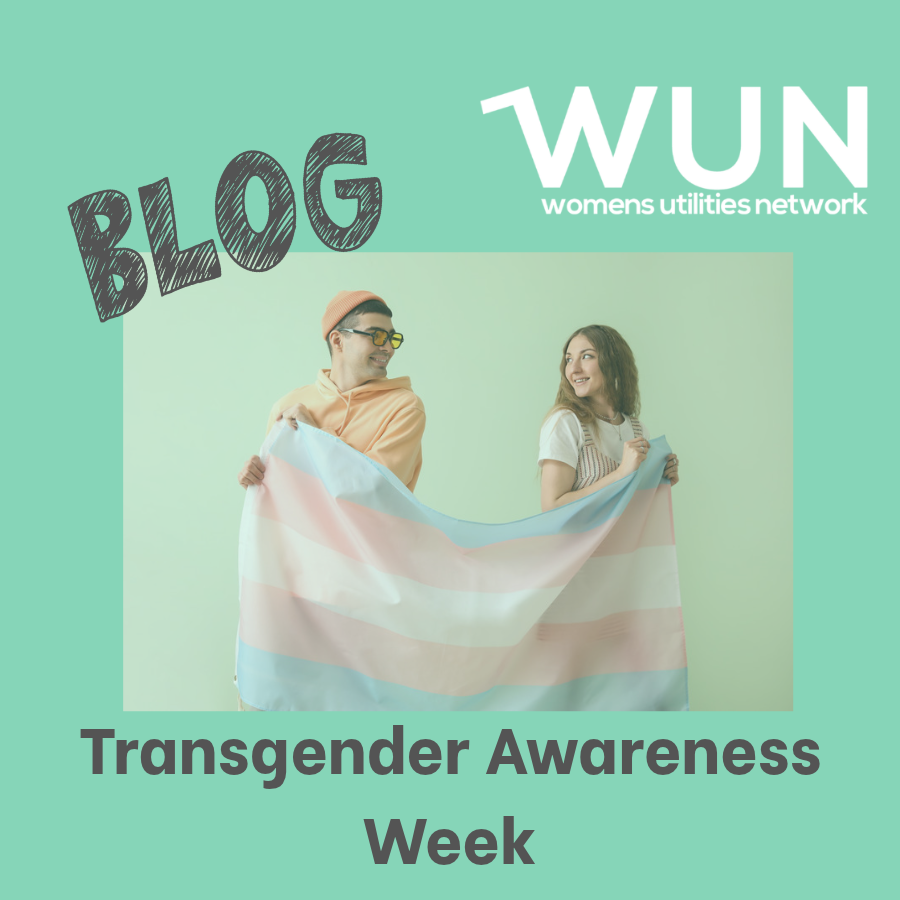
There’s something very odd about looking at an awareness calendar, and finding your own family circumstance on there.
Transgender Awareness Week comes around every November, and every year I feel a small jolt. To me, all my children are simply my children. They are beautiful, hilarious, remarkable, brave, and they drive us absolutely mad at times, even now they are all in their 20’s. For my children who are trans – their being trans isn’t a secret or a talking point in our house. It’s part of the furniture of our lives, as unremarkable as the colour of the kitchen walls. Business as usual.
But then this week arrives – a week that says: this is something to be aware of. Something other. I understand why, and I’m grateful to everyone who uses these weeks well – hopefully the day will come when we don’t need these days and weeks anymore, but this is definitely not that day. But it’s a strange feeling to have the most ordinary parts of your family held up to the light. It’s like looking at an everyday object under a magnifying glass until it starts to look unfamiliar.
And the week doesn’t stand alone. It leads straight into the Transgender Day of Remembrance on 20 November. That day began in 1999, a year after Rita Hester, a Black trans woman, was killed in Boston. A small candlelit vigil to read out the names of trans people lost to violence has been held every year since. So, a week about visibility ends in a day of grief. That isn’t a coincidence.
The noise, and the missing voices
Step outside our front door and the conversation about trans people is loud. It’s on the news, in the papers, across social media and in comment sections. Policy, debate, opinion, counter-opinion: round and round it goes. What strikes me, again and again, is how rarely I hear trans people themselves in the middle of it. They are talked about far more often than they are talked with. Politicians uses them as political footballs. Whole conversations happen about their lives and their futures and even laws surrounding them and what toilets they can use, and yet the people actually living those lives are somehow rarely if ever invited into the room.
I don’t say that to start an argument. I say it because, as a mum, I know how it feels when your child is discussed as a topic rather than a person. If you want to understand what it’s like to be trans, the best place to start is with trans people’s own words.
What still hurts
People might assume the hardest part is the big stuff: the headlines and the arguments. For me, even now, it’s the small things. The stare that lingers a second too long. The nudge and the whisper. The snide comment pitched just loud enough to be heard. None of it would make the news. All of it lands.
My children are grown up now, confident and capable, and face the world with quiet confidence. But you never stop wanting to stand between your child and unkindness, however old they are. And every time I see it, I think of the young people just starting out, who haven’t yet had to build that kind of armour. And I think of the young people whose parents find the new fact about their child too difficult to comprehend, and either feel they have to hide it, or in some cases, react entirely more negatively.
Why the small things aren’t small
It would be easy to think a stare or a snide remark is harmless. The evidence suggests otherwise. In one UK survey of nearly 900 trans people, 84% said they had thought about suicide at some point in their lives, and 48% had made an attempt (Bailey, Ellis & McNeil, 2014). Respondents linked that risk to social stigma and long waits for support, and pointed to a supportive environment as protective. The sample wasn’t fully representative, but the pattern is echoed elsewhere.
A Canadian study of 433 trans people in Ontario looked at what made the difference. It estimated that support from family and friends, and protection from transphobia, were each linked to roughly 160 to 170 fewer people in every 1,000 seriously considering suicide (Bauer et al., 2015). The lead researcher’s conclusion was that the risk comes from social marginalisation, not from being trans itself.
That is the part I most want people to sit with. These numbers aren’t fixed. They move with how the rest of us behave. Kindness, or simply leaving people be, isn’t a small thing. It’s protective.
What do I want from this week?
Honestly, something very simple. I want trans young people to be safe: getting changed for PE, at school, at home, and on the walk between the two. And I want the trans community to be left alone. Not debated, not scrutinised, not held up as a cause or a controversy. Just left to get on with their lives.
Ignored, even, in the best possible way. The way you ignore a neighbour putting the bins out, because there really is nothing remarkable to see. Perhaps that’s what any awareness week is really working towards: the day it’s no longer needed. A question to sit with: the next time trans people come up in conversation, whose voices are in the room, and whose aren’t?
If anything here has stirred something up for you, Samaritans are there free, day or night, on 116 123, and Switchboard LGBT+ offers a confidential helpline.
Sources
Bailey, L., Ellis, S.J. & McNeil, J. (2014). Suicide risk in the UK trans population and the role of gender transitioning in decreasing suicidal ideation and suicide attempt. Mental Health Review Journal, 19(4). Summary
Bauer, G. et al. (2015). Intervenable factors associated with suicide risk in transgender persons: a respondent driven sampling study in Ontario, Canada. BMC Public Health, 15:525. Paper · Western University summary
Case Western Reserve University, Encyclopedia of Cleveland History: Transgender Day of Remembrance
Where to find support
Helplines
Switchboard LGBT+: the UK’s LGBTQIA+ support line, answered by LGBTQIA+ volunteers. 0800 0119 100, 10am to 10pm every day.
Mindline Trans+: emotional and mental health support for trans and non-binary people, their families and friends. 0300 330 5468, Fridays 8pm to 11pm.
Galop: the LGBT+ anti-abuse charity, supporting people affected by domestic abuse, hate crime and conversion practices. 0800 999 5428.
Children, young people and families
Mermaids: supports trans, non-binary and gender-diverse young people and their families. 0808 801 0400.
Gendered Intelligence: a trans-led charity running youth groups for ages 8 to 25, family services and training.
The Proud Trust: helps you find your nearest LGBTQ+ youth group, including trans-specific groups.
FFLAG: supports parents and families of LGBT+ people. Helpline 0300 688 0368.
Depend: free, confidential support for adults with a trans partner, friend or adult family member.
Adults, community and wellbeing
Not A Phase: a trans-led charity for trans+ adults, running peer support groups, socials and free fitness classes.
The Beaumont Society: the UK’s longest-established trans support network, running since 1966.
Spectra: peer-led trans counselling and health advocacy in London.
LGBT Foundation: a national LGBTQ+ health and wellbeing charity. Helpline 0345 3 30 30 30.
Advocacy, rights and information
TransActual: a trans-led organisation working on healthcare, legal rights and representation.
GIRES: a trans-led research and education charity. It also hosts the TranzWiki directory of local groups.
Stonewall: campaigns for LGBTQ+ equality across the UK.
Trans+ Solidarity Alliance: a national advocacy network working with cis allies.
Scotland and Northern Ireland
Scottish Trans, part of the Equality Network
Belfast Trans Resource Centre, a project of TransgenderNI