Powerful Women State of the Nation 2026: Tackling the Frozen Middle
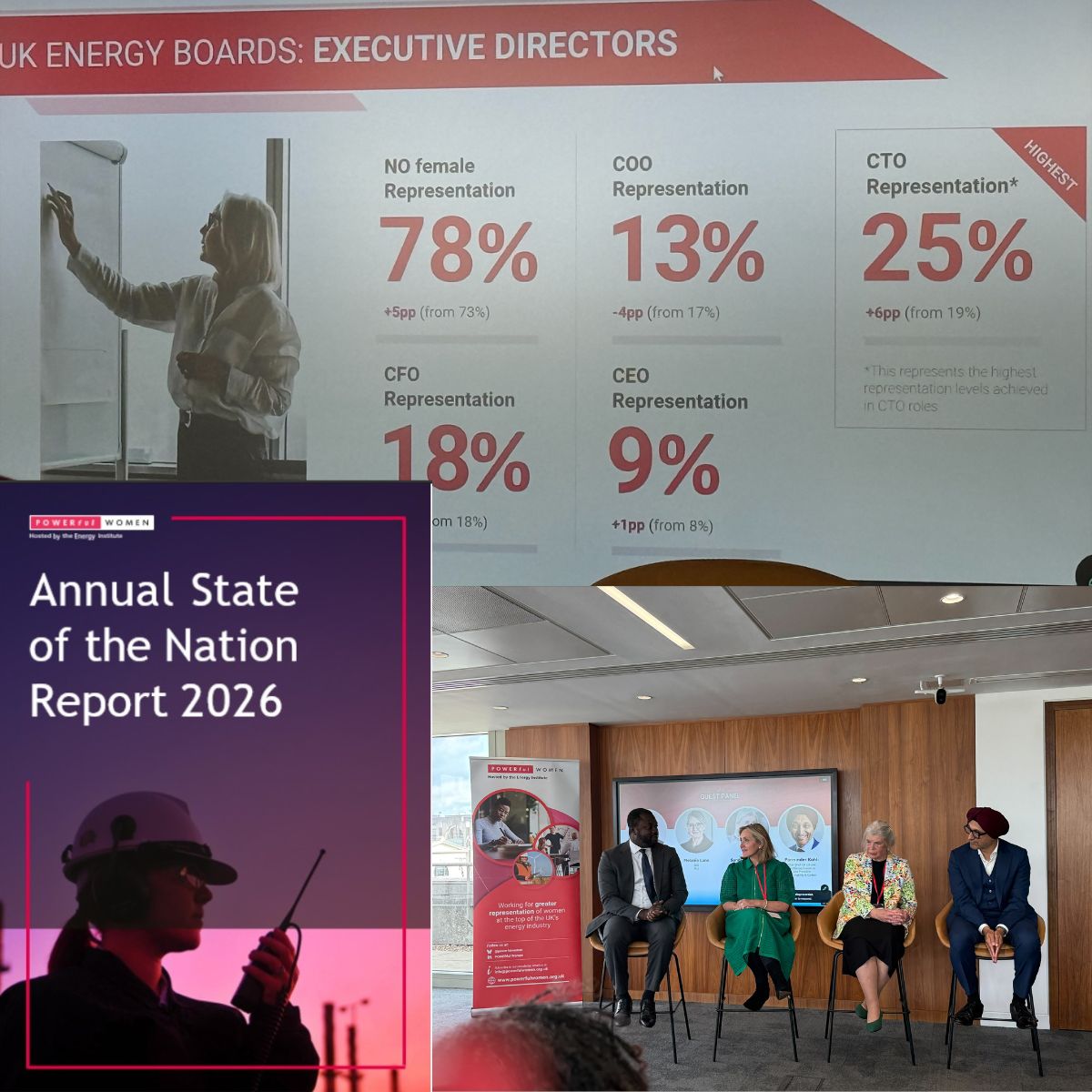
This week’s Powerful Women State of the Nation 2026 report launch highlighted a stark reality: whilst progress has been made at board level, the leadership pipeline remains stubbornly stuck.
Women represent just 20% of the energy workforce and only 16% of executive board positions. Whilst women now occupy around 30% of board seats, much of this progress has come through non-executive appointments rather than executive leadership roles.
The most concerning statistic for me was the “frozen middle” – female representation in middle management has remained at 34% for two consecutive years. This so-called “marzipan layer” is where future executives should be emerging from. If this layer isn’t moving, neither will executive representation.
The report also revealed that 22 boards removed at least one woman this year, compared with just five last year, and the number of all-male boards has increased to 13. These figures show why intentional succession planning and deliberate pathways into leadership are so important.
A key question discussed throughout the event was: if women hold 36% of leadership roles, why isn’t this translating into executive board positions?
The answer may lie in retention. Female attrition rates were highlighted as one of the most important data points we should be tracking. We also need more women in senior leadership roles with P&L responsibility, creating a stronger pathway to executive positions.
The panel discussion offered valuable insights. Melanie Lane spoke about the need to “build the muscle” of diversity, particularly during challenging times, and not revert to familiar patterns when making leadership decisions. There was also a strong message that organisations focus too heavily on the metrics and not enough on the behaviours that create inclusive cultures.
Another important theme was supporting people to “do life”. Flexible working, shared caring responsibilities and creating environments where both men and women can actively participate in family life are not just employee benefits—they are critical enablers of retention and progression.
Parminder Kohli made the point that if organisations fail to embrace diversity, talented women will simply move to those that do. In time, the market will reward companies that recognise the value of diverse thinking, innovation and talent.
For me, the message was clear. Achieving gender balance by 2030 will not be won in the boardroom alone. It will be won by supporting women to enter, stay, progress and thrive throughout their careers.
This is why WUN’s work matters. By creating networks, opportunities and support at every career stage, we help strengthen the pipeline of future female leaders. Because without a stronger pipeline, sustainable change at the top will remain out of reach.