World Hijab Day: 1st February #UnityInHijab
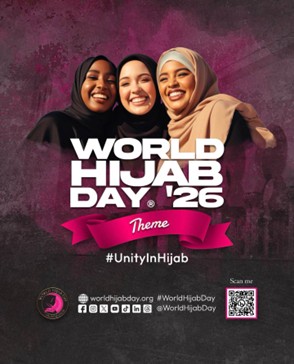
World Hijab Day is observed globally each year on 1 February. It is an opportunity to engage with awareness, reflection, and respectful curiosity about the experiences of Muslim women who choose to wear the hijab. The 2026 theme, #UnityInHijab, encourages solidarity across cultures and identities, highlighting the rich diversity within Muslim communities. The 2026 theme, #UnityInHijab, encourages solidarity across cultures and identities, highlighting the rich diversity within Muslim communities.
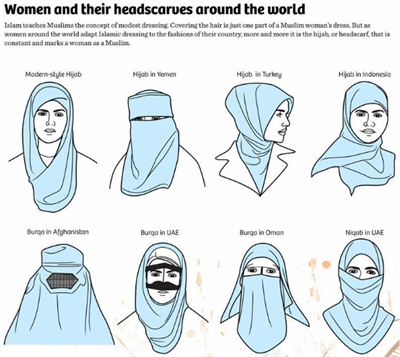
Understanding the Diversity of Hijab Experiences
The hijab is deeply personal. For some women, it represents faith, identity, modesty, belonging, resistance, or empowerment. For many, it holds more than one meaning at once. It is not a single story, and it should not be assumed to signify the same thing for all Muslim women.
Equally important is recognising that many Muslim women do not wear the hijab, and their choice is just as valid and personal, as is their faith. Muslim identity is shaped by a wide range of factors including ethnicity, culture, geography, upbringing, socio‑political context, and individual belief. No single expression reflects the whole.
Autonomy and Context
For many Muslim women, wearing the hijab is an act of autonomy and self‑definition a personal, faith‑based decision about identity, dignity, and how they wish to be seen in the world. At the same time, it is important to recognise that approaches to dress vary across countries and cultures, shaped by history, tradition, and legal frameworks. These contexts are complex and should not be simplified or judged through a single lens.
Regardless of setting, the principle that resonates widely is the importance of personal agency. Supporting women means supporting their right to choose how they express their identity, while also acknowledging the many different cultural and societal factors that can influence those choices.
Where Women in the Utilities Industry Have Led on Hijab‑Friendly PPE
Severn Trent Water – Aminah Shafiq
Aminah Shafiq, a Senior Water Quality Scientist at Severn Trent, identified that the company’s PPE range did not accommodate staff who wear a hijab. She went on to design what is believed to be the first inclusive PPE hijab within the UK utilities sector.
Her design:
- Was developed with PPE manufacturer Pulsar.
- Is lightweight, secure under helmets, and avoids safety‑risk pins.
- Is now globally accessible and has influenced adoption in other organisations.
This work has inspired young Muslim girls considering careers in engineering and has been recognised with awards in the water industry.
Interested in hearing further good practice ? – then catch up with the WUN podcast with Aminah as she shares her idea to come up with better safety head wear for women within the industry with different backgrounds & how she started her career in the industry.
Cadent Gas – Maryam Master
In the gas utilities sector, Maryam Master, a Commercial Project Trainee at Cadent Gas, recognised a gap in safe PPE for hijab‑wearing colleagues. Cadent adopted this as part of its wider commitment to inclusive PPE across its operational workforce.
She championed:
- Development of a fire‑retardant hijab suitable for gas‑hazard environments.
- A design compatible with hard hats, avoiding loose fabric that could pose ignition risks.
- Collaboration with PPE specialists to create a fabric that is thin, lightweight, and inherently flame‑retardant.
Tideway (Thames Tideway Tunnel) – Leena Begum
Earlier in the utilities and major infrastructure space, Leena Begum created one of the first recorded PPE hijabs while working as a Health, Safety & Wellbeing Coordinator on London’s Thames Tideway Tunnel project.
She designed:
- A specialist hijab that could be worn under safety helmets.
- A fluorescent safety coat adapted for modest dress.
Her work became a reference point for future innovations in inclusive PPE across UK utilities and construction.
Tarmac (Supplier to Utilities & Construction) – Amall Saleh
Amall Saleh, a Sustainability Graduate and hijab wearer, collaborated with PPE supplier Leo Workwear to design an improved “halo band” PPE hijab.
Key innovation:
- A fabric crown band that secures hard hats safely without pulling on hair.
- Design refinements based on real‑world use from Amall as a hijabi site worker.
This has influenced broader industry offerings available to water, gas, and energy site teams.
Curiosity Over Assumption
World Hijab Day is not an invitation to ask Muslim women to explain themselves or educate others unless they choose to. Instead, it encourages us to pause and examine our own assumptions:
- What do I assume when I see someone dressed differently from me?
- Which ideas or norms have I absorbed without questioning?
- Whose way of being have I unconsciously treated as the default?
Curiosity does not necessarily require agreement, only openness, and then hopefully kindness and thought in response. It asks us to sit with difference and recognise that our own lens is only one among many.
Inclusion Starts with Understanding
In an inclusive workplace, the aim is not to make everyone look or behave the same. It is to create space for people to show up authentically without needing to minimise or explain parts of themselves to feel accepted.
Supporting hijabi colleagues, and Muslim colleagues more broadly, can include:
- Respecting personal boundaries about discussing faith or dress.
- Not making assumptions about religiosity or personality based on appearance.
- Ensuring workplace policies, PPE, or uniform requirements accommodate different styles of head covering.
- Being mindful of religious observances, such as prayer times or fasting.
- Using correct terminology.
Small acts of awareness contribute to trust, belonging, and psychological safety.
A Call for Ongoing Curiosity
World Hijab Day is a reminder that inclusion often begins quietly with listening, unlearning, and recognising that every person’s experience is shaped by more than what we can see. Perhaps the most inclusive thing we can do is remain curious: about cultures, about choices, and about the many ways people express identity, faith, and all the unique aspects of themselves.
Gill Edwards, WUN Advocate & skewb.